


What is Cyber Security? Types, Importance & Threats
What is Cyber Security? Types, Importance & Threats
Cyber security is the practice of protecting computers, servers, mobile devices, networks, and data from unauthorized access, attacks, damage, or theft. It combines technology, processes, and people-driven practices to defend digital systems against an ever-growing range of threats, from malware and phishing to large-scale ransomware attacks. As businesses, governments, and individuals rely more heavily on digital infrastructure, cyber security has become essential for protecting sensitive information, maintaining trust, and ensuring operations run smoothly. This guide breaks down what cyber security is, the main types of cyber security, why it matters, and the most common threats you need to watch out for.
What is Cyber Security?
Cyber security refers to the collection of tools, technologies, policies, and practices designed to protect digital systems, networks, and data from malicious attacks or unauthorized access. It covers everything from securing a single laptop to protecting the massive infrastructure that powers global banking systems.
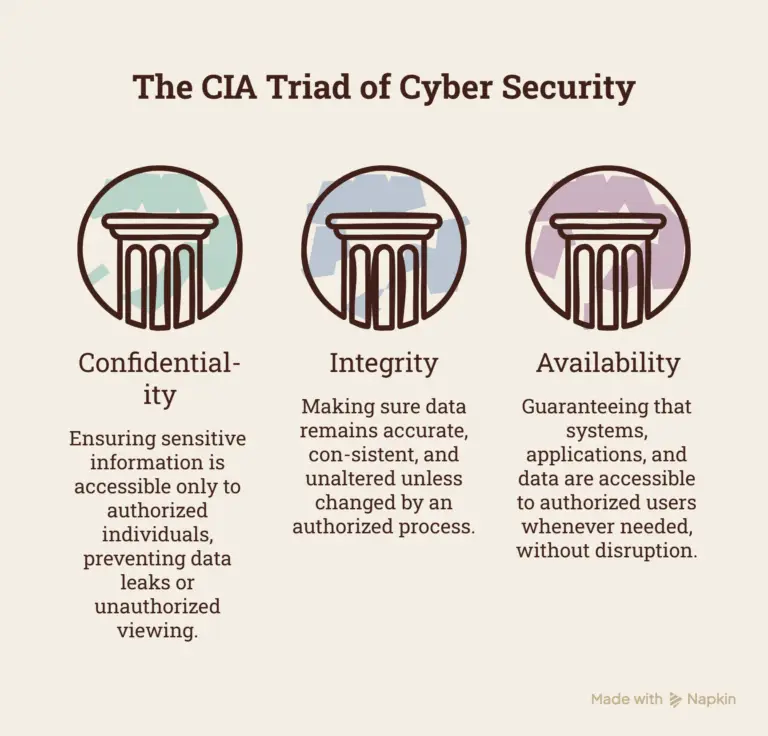
At its core, cyber security aims to achieve three main goals, often referred to as the CIA Triad:
The CIA Triad Explained
Confidentiality
Ensuring that sensitive information is accessible only to authorized individuals, preventing data leaks or unauthorized viewing.
Integrity
Making sure data remains accurate, consistent, and unaltered unless changed by an authorized process.
Availability
Guaranteeing that systems, applications, and data are accessible to authorized users whenever needed, without disruption.
Together, these three principles guide how organizations design and implement their security strategies.
Types of Cyber Security
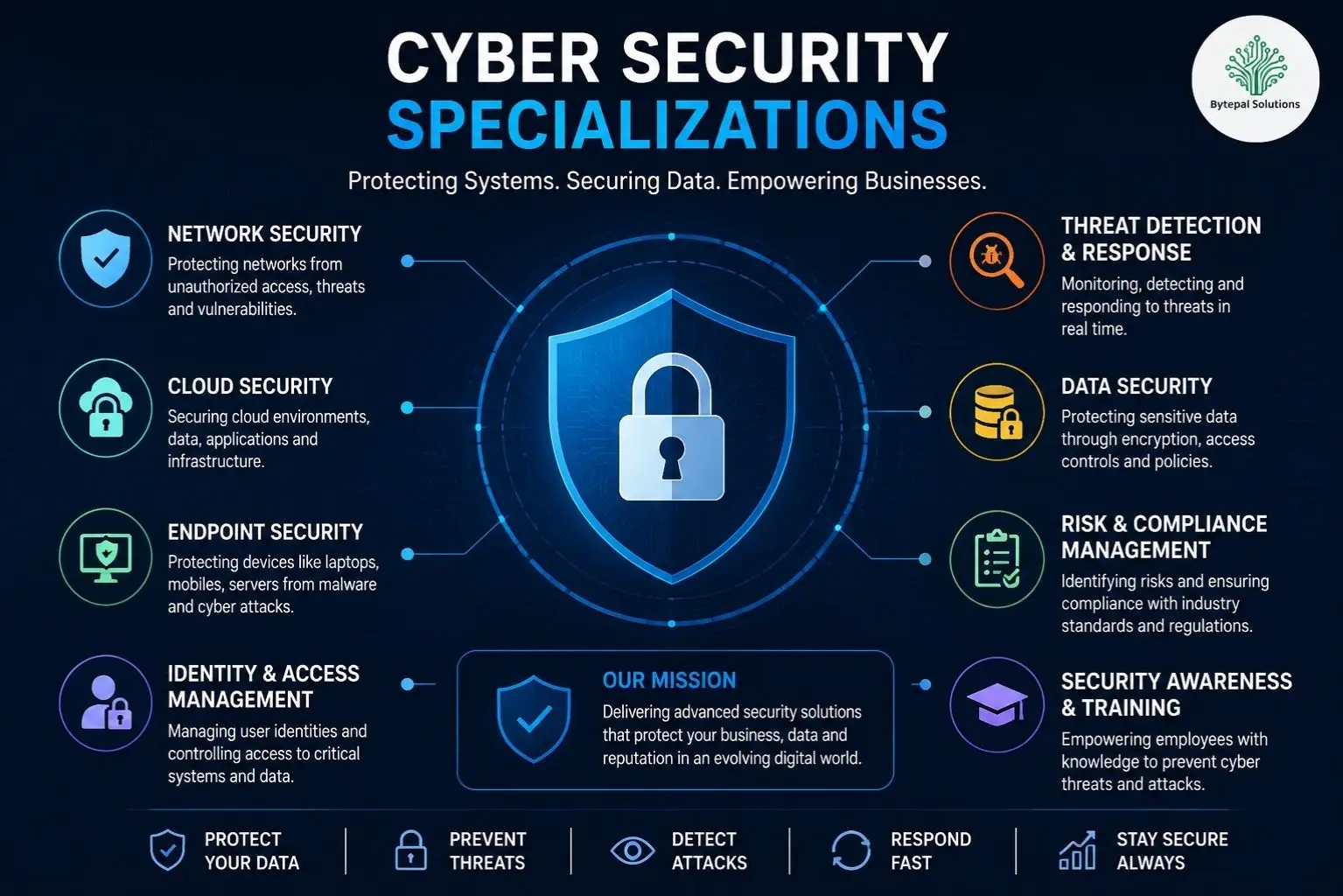
Cyber security isn’t a single discipline it’s a broad field made up of several specialized areas that work together to create a strong defense.
1. Network Security
Network security focuses on protecting the integrity and usability of an organization’s network and data. It involves firewalls, intrusion detection systems, and secure network architecture to prevent unauthorized access.
Common Network Security Tools
- Firewalls
- Virtual Private Networks (VPNs)
- Intrusion Detection and Prevention Systems (IDPS)
2. Application Security
Application security involves keeping software and devices free of threats by identifying and fixing vulnerabilities during development and after deployment.
Key Practices in Application Security
- Secure coding practices
- Regular vulnerability testing
- Patch management
3. Information Security
Information security (InfoSec) protects the integrity and privacy of data, both in storage and in transit. It ensures data is not tampered with or accessed by unauthorized parties.
4. Cloud Security
As more businesses move to cloud platforms, cloud security has become critical. It focuses on protecting data, applications, and infrastructure hosted on cloud services from breaches and misconfigurations.
5. Endpoint Security
Endpoint security protects individual devices laptops, smartphones, tablets that connect to a network, since each device can be a potential entry point for attackers.
6. Identity and Access Management (IAM)
IAM ensures that only authorized users have access to specific systems or data, using tools like multi-factor authentication (MFA) and role-based access controls.
7. Operational Security
Operational security involves the processes and decisions for handling and protecting data assets, including permissions and procedures for storing and sharing information.
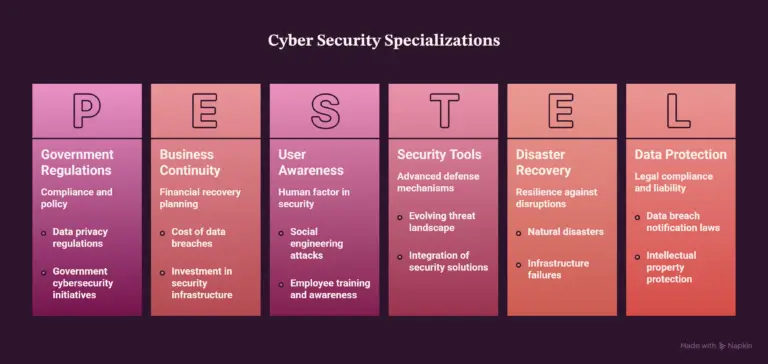
8. Disaster Recovery and Business Continuity
This type of security planning ensures an organization can quickly recover data and resume operations after a cyberattack, natural disaster, or other disruptive event.
Why is Cyber Security Important?
Cyber security is no longer optional it’s a fundamental requirement for individuals, businesses, and governments alike.
Protecting Sensitive Data
Organizations handle vast amounts of sensitive data, including customer information, financial records, and intellectual property. A single breach can expose this data, leading to severe consequences.
Preventing Financial Loss
Cyberattacks can be extremely costly, resulting in direct financial theft, ransom payments, legal penalties, and lost business opportunities.
Maintaining Business Reputation
A data breach can severely damage customer trust and brand reputation, often causing long-term harm that’s difficult to repair.
Ensuring Regulatory Compliance
Many industries are subject to strict data protection regulations. Strong cyber security practices help organizations avoid fines and stay compliant with laws like GDPR, HIPAA, and others.
Supporting Critical Infrastructure
Cyber security also protects essential services like power grids, healthcare systems, and financial institutions, where a successful attack could have widespread real-world consequences.
Common Cyber Security Threats
Understanding common threats is the first step toward defending against them.
1. Malware
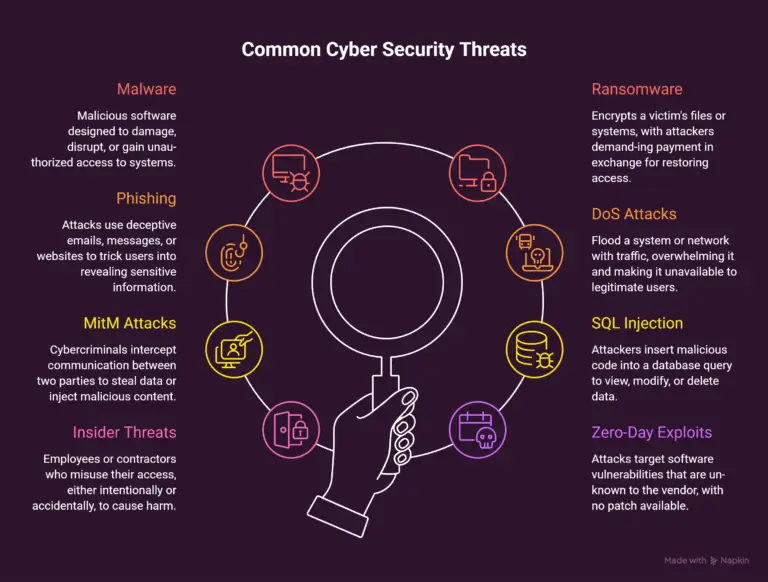
Malware is malicious software designed to damage, disrupt, or gain unauthorized access to systems.
Types of Malware
- Viruses – Attach themselves to legitimate files and spread when executed
- Worms – Self-replicate and spread across networks without user action
- Trojans – Disguise themselves as legitimate software to trick users
- Spyware – Secretly monitors and collects user information
2. Ransomware
Ransomware encrypts a victim’s files or systems, with attackers demanding payment in exchange for restoring access. It’s one of the most financially damaging threats facing organizations today.
3. Phishing
Phishing attacks use deceptive emails, messages, or websites to trick users into revealing sensitive information like passwords or credit card numbers.
Common Phishing Techniques
- Spear phishing (targeted attacks on specific individuals)
- Whaling (targeting high-level executives)
- Smishing (phishing via SMS text messages)
4. Denial-of-Service (DoS) Attacks
DoS and Distributed Denial-of-Service (DDoS) attacks flood a system or network with traffic, overwhelming it and making it unavailable to legitimate users.
5. Man-in-the-Middle (MitM) Attacks
In these attacks, cybercriminals intercept communication between two parties to steal data or inject malicious content without either party knowing.
6. SQL Injection
Attackers insert malicious code into a database query, allowing them to view, modify, or delete data they shouldn’t have access to.
7. Insider Threats
Not all threats come from outside an organization. Insider threats involve employees or contractors who misuse their access, either intentionally or accidentally, to cause harm.
8. Zero-Day Exploits
These attacks target software vulnerabilities that are unknown to the vendor, meaning there’s no patch or fix available at the time of the attack.
How to Protect Against Cyber Threats
Best Practices for Individuals
- Use strong, unique passwords and enable multi-factor authentication
- Keep software and devices updated regularly
- Avoid clicking suspicious links or downloading unknown attachments
- Use reputable antivirus and anti-malware software
Best Practices for Organizations
- Conduct regular security audits and employee training
- Implement a robust incident response plan
- Use encryption for sensitive data
- Apply the principle of least privilege for access control
- Invest in continuous network monitoring
Conclusion
Cyber security is a critical, ever-evolving field that protects the digital systems we rely on every day. With cyber threats growing more sophisticated, understanding the different types of cyber security, recognizing common threats, and following best practices are essential steps for individuals and organizations alike. Staying proactive rather than reactive is the best defense against the constantly shifting landscape of cyber risks.
October 26, 2026