


How does cloud security protect business data
More About Cloud Security
What Is Cloud Security? A Complete Guide to Types, Threats, Benefits, and Solutions
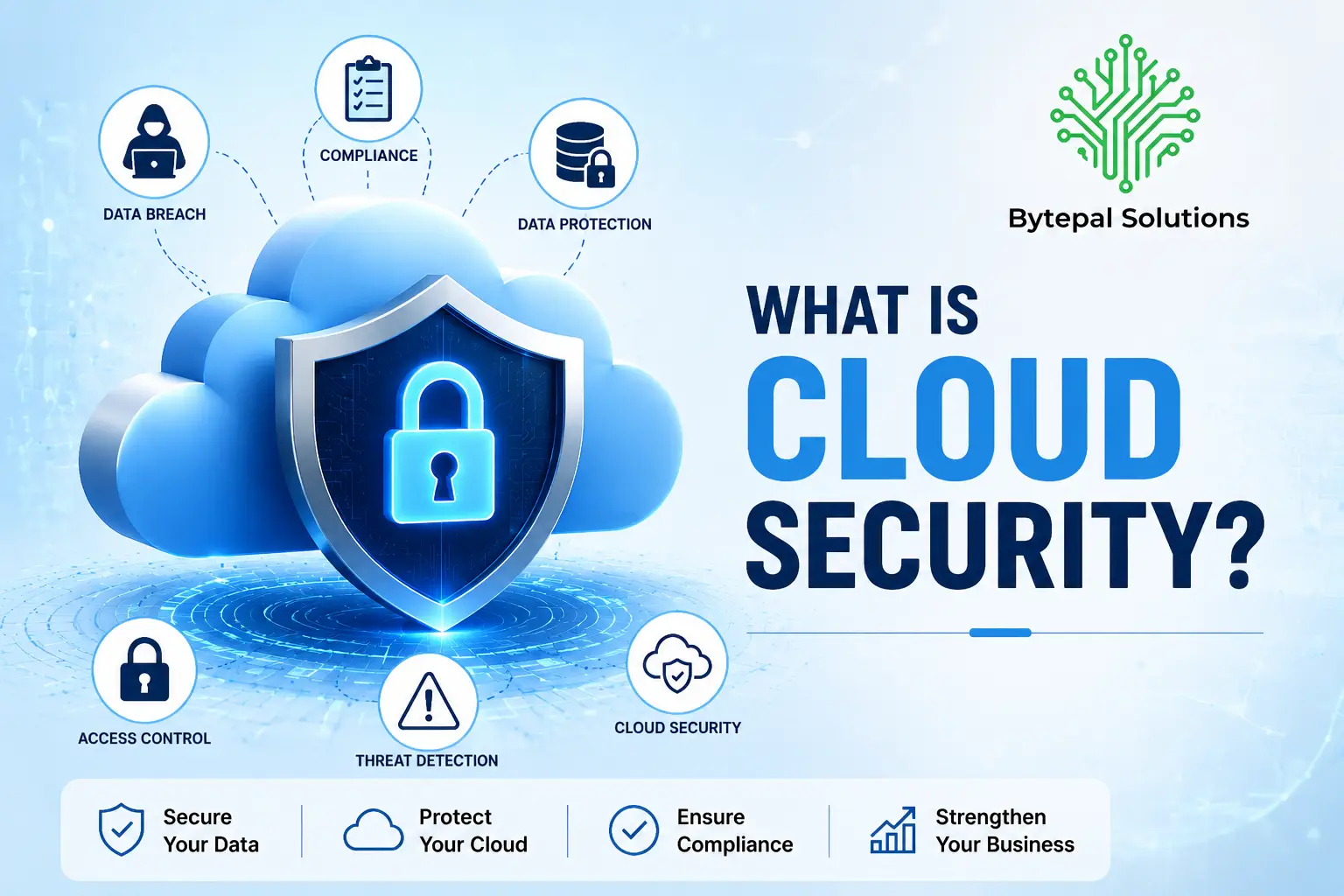
Cloud security is the practice of protecting cloud-based systems, applications, networks, and data from cyber threats, unauthorized access, data breaches, and security risks. It combines technologies, policies, processes, and security controls to protect information stored and managed in cloud environments.
As businesses increasingly use cloud platforms for data storage, software applications, remote work, and digital operations, cloud security has become a critical part of modern cybersecurity strategies.
Cloud security helps organizations maintain data privacy, prevent cyber attacks, meet compliance requirements, and ensure business continuity.
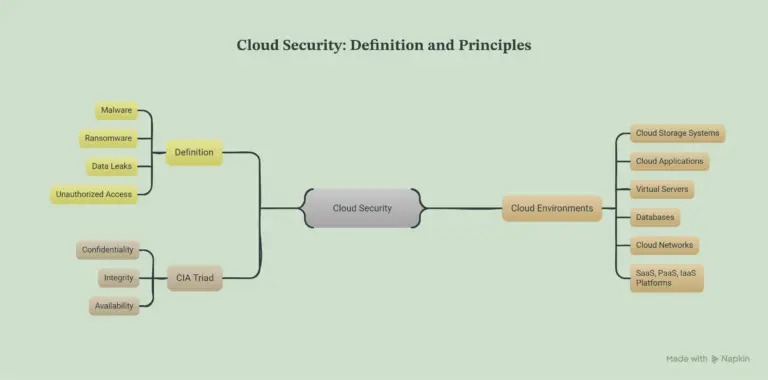
Cloud security refers to a set of security measures designed to protect cloud computing environments from threats such as malware, ransomware, data leaks, and unauthorized access.
Cloud environments include:
The main goal of cloud security is to ensure:
These three principles are known as the CIA Triad, which forms the foundation of information security.
Businesses of all sizes are adopting cloud services because they provide flexibility, scalability, and cost efficiency. However, moving data and applications to the cloud also introduces new security challenges.
Cloud security is important because it helps organizations:
Companies store valuable information in the cloud, including:
Customer records
Financial information
Employee data
Business documents
Intellectual property
Cloud security prevents unauthorized access and data theft.
Cybercriminals target cloud environments through:
Data breaches
Account hijacking
Malware attacks
Ransomware
Phishing attacks
Strong cloud security solutions help detect and prevent these threats.
Modern businesses use cloud platforms to allow employees to work from anywhere.
Cloud security ensures employees can securely access company resources without exposing sensitive information.
Many industries must follow data protection regulations and security standards.
Cloud security helps businesses meet requirements related to:
Data privacy
Access control
Data protection
Security monitoring
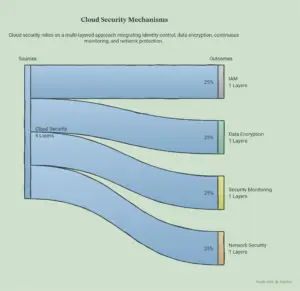
Cloud security works through multiple layers of protection that secure cloud infrastructure, applications, and data.
Identity and Access Management controls who can access cloud resources.
IAM security includes:
User authentication
Role-based permissions
Multi-factor authentication (MFA)
Access monitoring
An employee in the marketing department should only access marketing files, not financial or confidential company data.
Encryption converts sensitive information into an unreadable format that can only be accessed with the correct encryption key.
Cloud encryption protects data:
During storage
During transmission
During sharing
Cloud security tools continuously monitor cloud environments to detect suspicious activities.
Monitoring helps identify:
Unauthorized login attempts
Unusual data transfers
Malware activity
Security vulnerabilities
Cloud network security protects communication between users, applications, and cloud systems.
It includes:
Firewalls
Virtual private networks (VPNs)
Intrusion prevention systems
Network segmentation
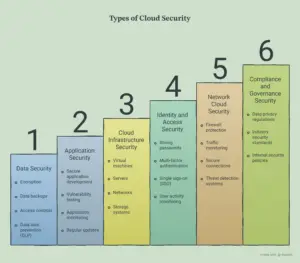
Cloud security includes different security areas based on what needs protection.
Data security focuses on protecting information stored in cloud environments.
It includes:
Encryption
Data backups
Access controls
Data loss prevention (DLP)
A data breach can result in financial losses, legal issues, and damage to business reputation.
Application security protects cloud-based applications from vulnerabilities and cyber attacks.
It includes:
Secure application development
Vulnerability testing
Application monitoring
Regular updates
Weak authentication
Software vulnerabilities
API security issues
Unauthorized access
Infrastructure security protects the underlying cloud environment, including:
Virtual machines
Servers
Networks
Storage systems
It helps prevent unauthorized access and system compromises.
Identity security ensures only authorized users can access cloud resources.
Common security methods include:
Strong passwords
Multi-factor authentication
Single sign-on (SSO)
User activity monitoring
Network security protects cloud communication channels from cyber threats.
It includes:
Firewall protection
Traffic monitoring
Secure connections
Threat detection systems
Compliance security ensures organizations follow industry regulations and security policies.
Examples include:
Data privacy regulations
Industry security standards
Internal security policies
Although cloud platforms provide advanced security features, cyber threats remain a major concern.
Below are some common cloud security threats businesses face.
A data breach occurs when unauthorized individuals gain access to sensitive information.
Common causes include:
Weak passwords
Misconfigured cloud storage
Poor access controls
Stolen credentials
Use encryption
Enable MFA
Regularly review permissions
Monitor user activity
Cloud misconfiguration happens when cloud settings are incorrectly configured, creating security vulnerabilities.
Examples:
Publicly accessible storage
Incorrect user permissions
Exposed databases
Regular security audits
Configuration monitoring tools
Cloud security best practices
Account hijacking occurs when attackers steal user credentials and gain access to cloud accounts.
Attack methods include:
Phishing emails
Password attacks
Credential theft
Use MFA
Create strong passwords
Monitor login activity
Cybercriminals use malware to compromise cloud systems and steal or encrypt business data.
Cloud ransomware attacks can result in:
Data loss
Business downtime
Financial damage
Regular backups
Endpoint protection
Security monitoring
Insider threats occur when employees or trusted users intentionally or accidentally expose sensitive information.
Examples:
Sharing confidential files
Using unauthorized applications
Improper access usage
User access controls
Employee security training
Activity monitoring
Cloud services often rely on APIs for communication between applications.
Poorly secured APIs can allow attackers to:
Access sensitive data
Manipulate systems
Exploit vulnerabilities
Authentication controls
API monitoring
Regular testing
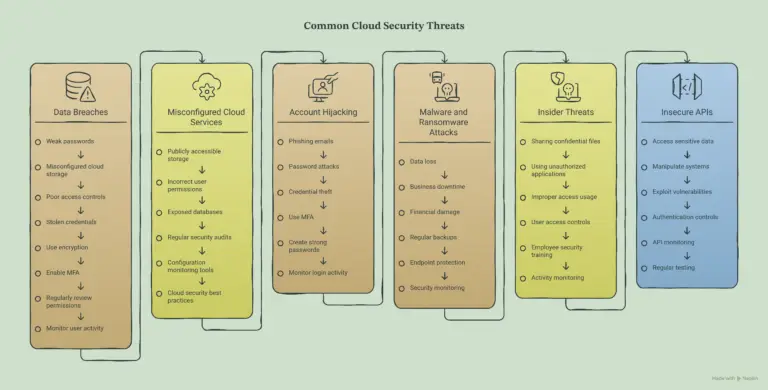
Businesses can improve cloud security by implementing the following strategies:
MFA adds an extra layer of protection by requiring additional verification beyond passwords.
Benefits:
Reduces unauthorized access
Protects stolen passwords
Improves account security
Organizations should follow the principle of least privilege.
This means users should only have access to the information required for their job.
Encryption protects confidential information from unauthorized users.
Businesses should encrypt:
Customer data
Financial records
Business files
Security audits help identify vulnerabilities before attackers exploit them.
Audits should include:
Access reviews
Configuration checks
Vulnerability assessments
Regular updates help fix security vulnerabilities and improve protection against new threats.
Cloud backups protect businesses from:
Accidental deletion
Cyber attacks
Hardware failures
Ransomware
Employees play an important role in maintaining security.
Training should cover:
Phishing awareness
Password security
Safe file sharing
Security policies
Small businesses increasingly use cloud services for email, storage, accounting, customer management, and collaboration.
Cloud security helps small businesses:
Protect customer information
Reduce security risks
Avoid costly downtime
Improve operational efficiency
Secure remote employees
Many small businesses work with managed IT service providers to implement affordable cloud security solutions without maintaining a large internal IT team.
The future of cloud security will focus on smarter and more automated protection methods.
Emerging trends include:
AI helps detect unusual behavior and identify cyber threats faster.
Zero Trust follows the principle of:
“Never trust, always verify.”
Every user and device must be continuously verified before accessing resources.
Automation helps organizations quickly detect and respond to security incidents.
Modern tools use analytics and machine learning to identify sophisticated attacks.
Cloud security has become an essential part of modern business protection as organizations continue moving their operations to cloud platforms.
A strong cloud security strategy protects valuable data, reduces cyber risks, and ensures business continuity. By implementing security best practices such as encryption, access control, monitoring, and employee awareness training, businesses can safely take advantage of cloud technology.
Whether you are a small business or a large enterprise, investing in cloud security is critical for protecting your digital future.
What Is Cloud Security? A Complete Guide to Types, Threats, Benefits, and Solutions
Welcome Back 👋
Sign in to access your account and continue where you left off.
Welcome aboard 🚀
Create your account to access everything you need.