
AI and Machine Learning
How AI and Machine Learning Improve Modern Malware Detection
AI and Machine Learning Are Changing Malware Detection
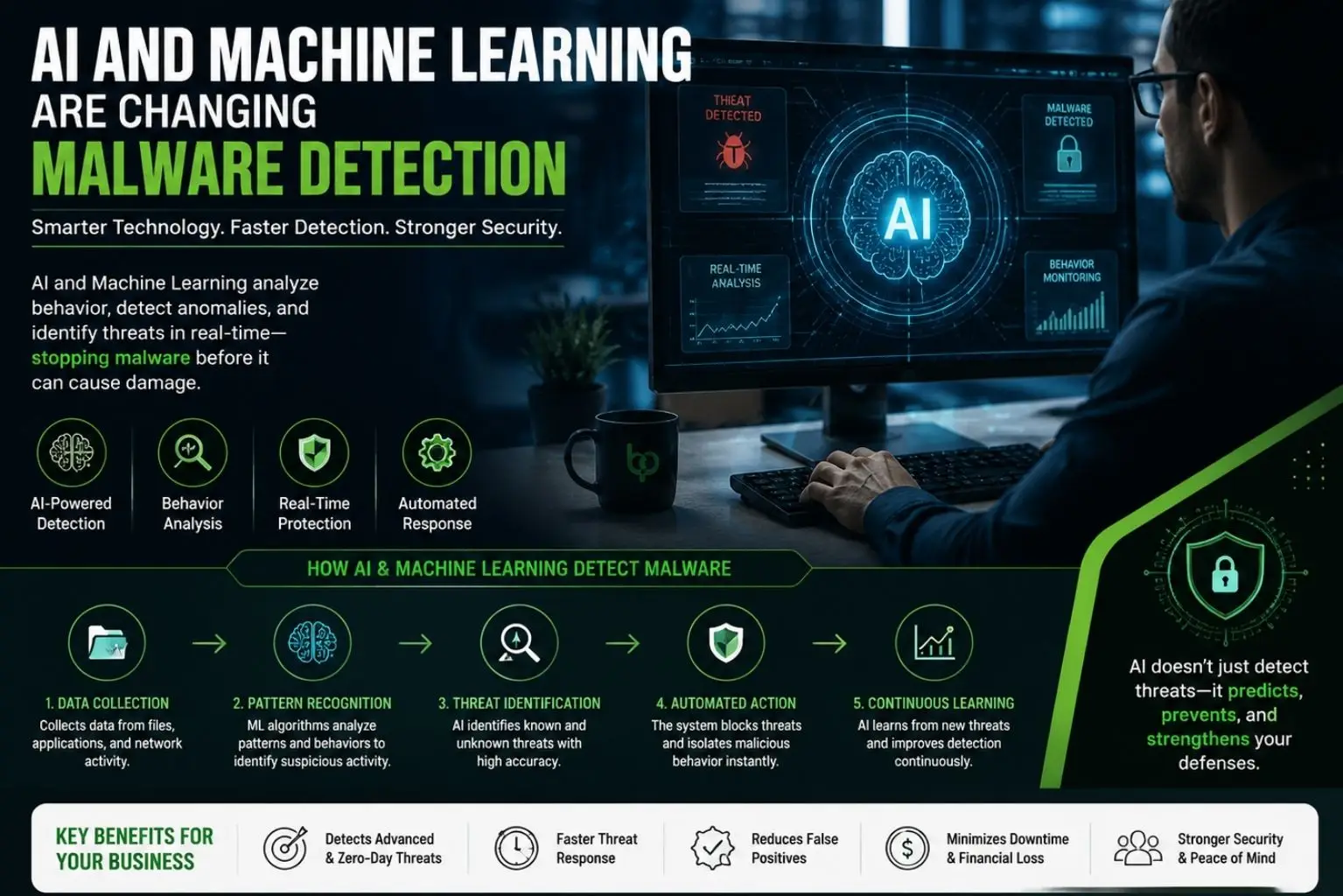
Cybercriminals are becoming smarter every day, creating malware that can bypass traditional antivirus software and exploit new vulnerabilities. As ransomware, phishing attacks, fileless malware, and zero-day threats continue to rise, businesses need a more intelligent way to protect their systems.
This is where AI and Machine Learning are making a significant impact. Instead of relying only on known malware signatures, AI-powered cybersecurity solutions analyze behavior, recognize suspicious patterns, and identify threats before they cause damage.
Today, organizations of all sizes are adopting AI and Machine Learning to strengthen malware detection, automate threat analysis, and improve incident response. These technologies help security teams detect both known and unknown threats faster than traditional security methods.
In this guide, we’ll explore how AI and Machine Learning are changing malware detection, why they matter, and how businesses can benefit from AI-powered cybersecurity solutions.
What Are AI and Machine Learning?
Artificial Intelligence (AI) is a technology that enables computers to perform tasks that normally require human intelligence, such as decision-making, pattern recognition, and problem-solving.
Machine Learning (ML) is a branch of AI that allows systems to learn from data instead of relying only on predefined programming. By analyzing millions of files, network events, and user behaviors, Machine Learning continuously improves its ability to identify malicious activities.
In cybersecurity, AI and Machine Learning work together to:
-
Detect suspicious behaviors
-
Analyze massive amounts of security data
-
Predict future cyber threats
-
Automate malware detection
-
Reduce false positives
-
Improve response times
Unlike traditional antivirus software, AI-powered systems become smarter as they process more information.
Why Traditional Malware Detection Is No Longer Enough
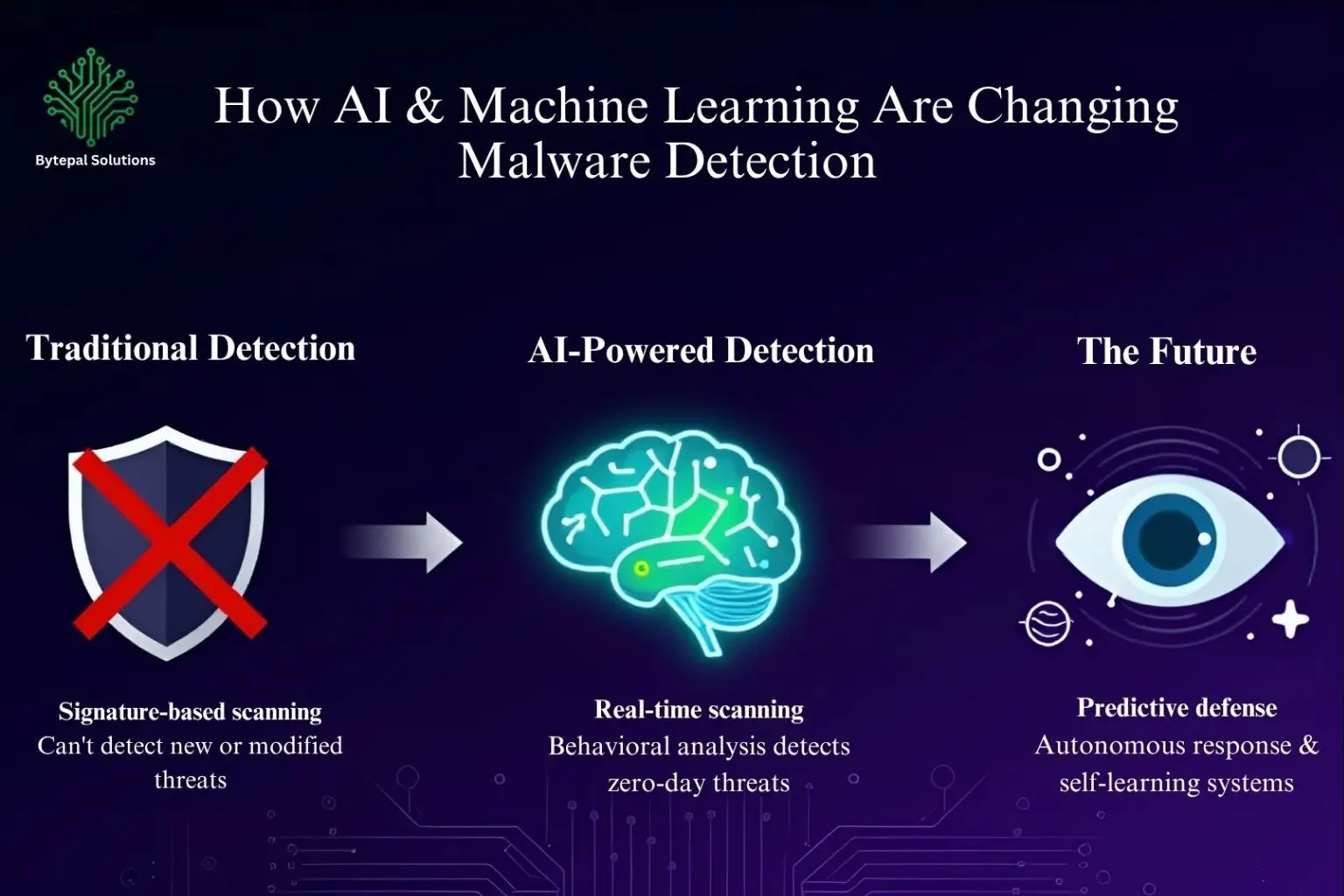
For years, antivirus software relied on signature-based detection. This method compares files against a database of known malware signatures.
Although effective against previously identified threats, signature-based detection struggles with modern attacks because cybercriminals constantly modify malware to avoid detection.
Some of today’s advanced threats include:
- Zero-day attacks
- Fileless malware
- Polymorphic malware
- Ransomware
- Advanced Persistent Threats (APTs)
- AI-generated malware
These attacks often change their behavior or code, making them invisible to traditional antivirus software.
As a result, organizations require smarter detection methods powered by AI and Machine Learning.
How AI and Machine Learning Detect Malware
Instead of searching only for known malware signatures, AI systems analyze the behavior of files, applications, and users.
1. Behavioral Analysis
AI monitors how programs behave.
If an application suddenly begins encrypting thousands of files or accessing sensitive system areas, AI flags the activity as suspicious—even if the malware has never been seen before.
2. Pattern Recognition
Machine Learning analyzes billions of security events to identify patterns associated with cyberattacks.
It can quickly determine whether an activity resembles ransomware, spyware, trojans, or another form of malware.
3. Anomaly Detection
Every network has a normal pattern of behavior.
AI identifies unusual activities, such as:
- Unexpected logins
- Abnormal file transfers
- Suspicious network traffic
- Unusual application behavior
These anomalies often indicate an ongoing cyberattack.
4. Threat Intelligence Integration
Modern AI security platforms combine data from global threat intelligence sources.
This enables systems to recognize emerging malware campaigns before they reach your organization.
5. Continuous Learning
Unlike traditional software, Machine Learning continuously improves.
Each new cyberattack helps train the system, making future detections more accurate.
Benefits of AI and Machine Learning in Malware Detection
Faster Threat Detection
AI analyzes thousands of events every second, identifying malware much faster than manual investigations.
Improved Accuracy
Machine Learning reduces false positives by understanding the difference between normal and malicious activities.
Detection of Unknown Malware
AI can identify new malware families without requiring existing signatures.
Automated Incident Response
Many AI-powered security platforms automatically:
- Isolate infected devices
- Block malicious files
- Terminate suspicious processes
- Alert security teams
Automation significantly reduces response time.
Better Protection Against Ransomware
AI detects unusual encryption activities before ransomware spreads across the network.
Early detection minimizes financial losses and operational downtime.
Types of Malware AI Can Detect
AI-powered cybersecurity solutions can detect various forms of malware, including:
Ransomware
Identifies abnormal encryption behaviors before files become inaccessible.
Trojans
Recognizes hidden malicious programs pretending to be legitimate software.
Spyware
Detects unauthorized monitoring activities.
Worms
Stops malware attempting to spread across connected devices.
Fileless Malware
Monitors memory-based attacks that leave no traditional file signatures.
Polymorphic Malware
Detects constantly changing malware through behavioral analysis instead of code signatures.
AI vs Traditional Antivirus
| Feature | Traditional Antivirus | AI-Powered Security |
|---|---|---|
| Signature-Based Detection | Yes | No |
| Detects Unknown Malware | Limited | Yes |
| Behavioral Analysis | Limited | Advanced |
| Learns Over Time | No | Yes |
| Predictive Threat Detection | No | Yes |
| Automated Response | Limited | Advanced |
| Zero-Day Protection | Limited | Strong |
AI does not replace antivirus—it enhances it by providing proactive protection against evolving threats.
Real-World Applications of AI in Cybersecurity
Organizations across industries use AI-powered security for:
Financial Institutions
Banks detect fraudulent transactions in real time using AI models.
Healthcare
Hospitals use AI to protect sensitive patient records against ransomware.
Retail
Retail businesses identify payment fraud and prevent data breaches.
Manufacturing
AI monitors industrial systems for suspicious activity that could disrupt operations.
Small Businesses
Affordable AI-powered endpoint protection helps small businesses defend against cyberattacks without large security teams.
Challenges of AI-Based Malware Detection
Although AI offers many advantages, organizations should also understand its limitations.
High-Quality Data Requirements
Machine Learning depends on accurate training data.
Poor-quality datasets can reduce detection accuracy.
Evolving Attack Techniques
Cybercriminals are beginning to use AI themselves to create more sophisticated malware.
This creates an ongoing competition between attackers and defenders.
Human Oversight
AI supports cybersecurity professionals but does not eliminate the need for experienced security analysts.
Human expertise remains essential for investigating complex incidents.
Future Trends in AI and Machine Learning for Cybersecurity
The future of malware detection will be shaped by several emerging technologies:
- Predictive threat intelligence
- Autonomous security operations
- AI-powered Security Operations Centers (SOC)
- Generative AI for cyber defense
- Advanced endpoint detection and response (EDR)
- Cloud-native AI security
- Automated vulnerability management
- Intelligent threat hunting
As AI evolves, cybersecurity solutions will become faster, smarter, and more adaptive.
Why Businesses Need AI-Powered Malware Protection
Cyberattacks are no longer limited to large enterprises. Small and medium-sized businesses are increasingly targeted because attackers often view them as having weaker defenses.
Investing in AI-powered malware protection helps businesses:
- Detect threats before damage occurs
- Protect sensitive customer information
- Minimize downtime
- Reduce financial losses
- Improve regulatory compliance
- Strengthen customer trust
- Enhance overall cybersecurity resilience
For organizations operating in today’s digital landscape, AI-driven security is becoming a necessity rather than a luxury.
How Bytepal Solutions Helps Protect Your Business
At Bytepal Solutions, we understand that modern cyber threats require modern defenses. We provide advanced cybersecurity and antivirus solutions designed to help businesses stay protected against evolving malware, ransomware, phishing attacks, and other sophisticated cyber risks.
As a trusted Malwarebytes partner, we help organizations implement intelligent endpoint protection, proactive threat monitoring, and security best practices tailored to their unique needs. Our team focuses on delivering reliable, scalable security solutions that reduce risk while supporting business continuity.
Whether you’re a small business or a growing enterprise, Bytepal Solutions can help you strengthen your cybersecurity strategy with solutions built for today’s threat landscape.
How AI and Machine Learning Improve Modern Malware Detection
More About AI and Machine Learning
Learn how AI and Machine Learning improves scalability, performance, security, and user experience. Discover best practices and business benefits.