
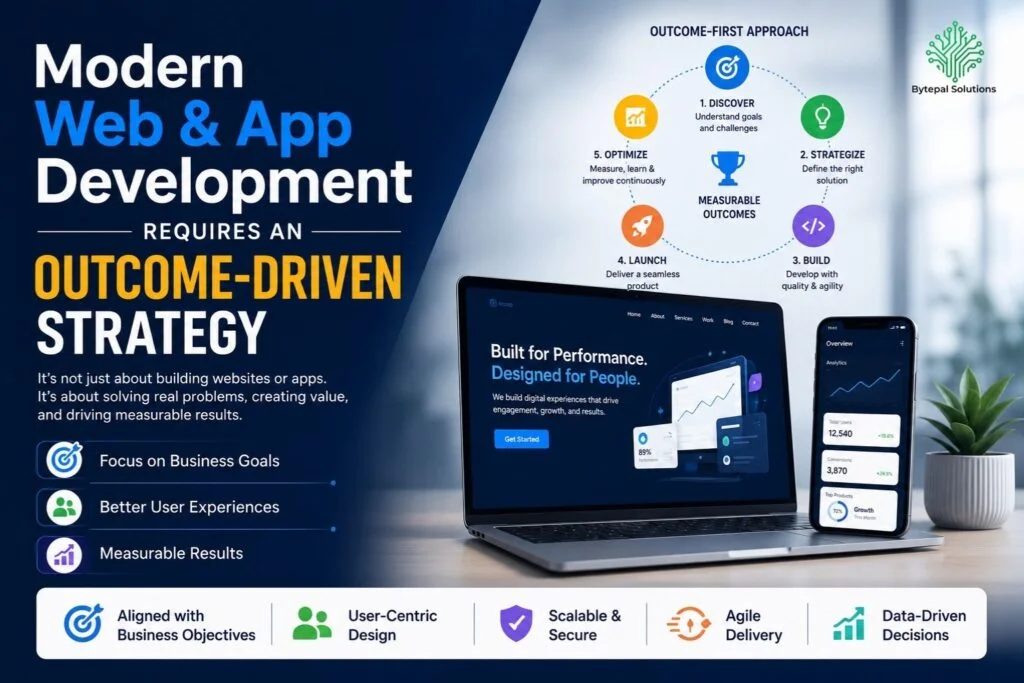
For years, enterprise digital products followed a familiar, linear lifecycle. A business would identify a need, hire an engineering team to write custom code for months, and launch a monolithic application. Then came the endless cycle of expensive maintenance, rigid software upgrades, and mounting technical debt. In today’s fast-moving enterprise environment, that traditional model is a financial bottleneck. Modern web and mobile applications are no longer just software products; they are the core engines driving business revenue, operational efficiency, and customer retention. For executive leadership, the priority has shifted from simply launching a platform to engineering long-term ROI. To stay competitive, forward-thinking organizations are abandoning rigid software architectures in favor of Outcome-Driven Development and Composable Systems. Shifting from Feature-First to Outcome-Driven Engineering The most common point of failure in complex software projects isn’t the code itself—it is a lack of alignment with measurable business outcomes. Teams frequently fall into the trap of prioritizing features over functionality, building complex components before validating their economic or operational utility. An outcome-driven strategy reverses this methodology by anchoring every technical decision to explicit corporate Key Performance Indicators (KPIs). Technical Choices Driven by Business Impact Enterprise Objective Technical Execution Strategy Core Metric Impact Accelerate Time-to-Market Cross-platform consolidation utilizing unified frameworks like Flutter or React Native instead of separate iOS and Android native silos. 30-40% reduction in upfront engineering hours; simultaneous multi-platform release parity. Optimize System Performance Migrating legacy frontend infrastructure to edge-computed environments and utilizing performance-first compilers. Sub-second page loads, stabilized Core Web Vitals (LCP/INP), and direct optimization of organic search visibility. Lower Customer Support Costs Designing predictive user interfaces (UI) and integrating contextual workflow automation directly into the client dashboard. Drastic reduction in customer onboarding duration and a drop in low-tier support ticket creation. The Power of Composable and API-First Architecture Monolithic web and mobile applications—where the user interface, backend logic, and database are permanently bound together—are structurally brittle. When one component requires an update or experiences a traffic spike, the entire system faces downtime risks. To build a resilient digital presence, enterprises are moving toward Composable Architecture. [ Headless Frontend: Web / iOS / Android ] │ ▼ (Secure API Layer) ┌─────────────────────────────────────────────────────────┐ │ Decoupled Core Microservices │ │ ┌─────────────────┐ ┌─────────────────┐ ┌───────────┐ │ │ │ Enterprise CRM │ │ Payment Gateway │ │ Custom AI │ │ │ └─────────────────┘ └─────────────────┘ └───────────┘ │ └─────────────────────────────────────────────────────────┘ This modular approach treats software as a collection of independent, interchangeable building blocks connected via secure Application Programming Interfaces (APIs). Decoupled Frontends (Headless Frameworks): By separating your client-facing application from backend databases, you gain the freedom to overhaul your web design or launch a new mobile application without rewriting your core business logic. Seamless Third-Party Ecosystem Integration: An API-first infrastructure allows your software to communicate flawlessly with internal enterprise resource planning (ERP) systems, legacy customer relationship management (CRM) platforms, and custom business intelligence databases. Risk Mitigation and Elastic Scalability: If your payment gateway or a specific data microservice experiences heavy transaction volumes, only that isolated module scales up via cloud-native load balancers—keeping the rest of your application fast, secure, and completely unaffected. Prioritizing Enterprise-Grade Security and Compliance When building web and mobile applications that handle proprietary data, financial transactions, or user metrics, security cannot be treated as a final quality assurance checklist. It must be embedded directly into the continuous integration and deployment (CI/CD) pipeline. Modern engineering frameworks demand a proactive defensive posture: The Baseline of Security: Every digital platform must be engineered with explicit Role-Based Access Control (RBAC), end-to-end data encryption across both transit and rest states, and absolute compliance alignment with regional and industry data privacy mandates. Engineer Your Digital Infrastructure with BytePal Solutions Developing high-impact digital products requires a partner who understands the fine balance between clean code, system security, and long-term business value. At BytePal Solutions, we specialize in architecting scalable, performance-driven web platforms and cross-platform mobile applications. From minimum viable product (MVP) design for market validation to complex enterprise system modernization, our seasoned software engineers build the digital tools that propel your company forward. Antivirus Plans Complete protection for your digital life and identity. Real-time Malware Protection Ransomware & Virus Defense Phishing & Ad Blocking Secure VPN & Privacy Tools STANDARDPLUSTOTAL$49.99Get Protected with Standard → AMC Plans Smart maintenance for your systems. Regular System Health Checks Software Updates & Optimization Remote IT Support Priority Assistance 1 Device2 Devices3 Devices$249.99Get Protected for 1 Device → Digital Solutions WEBSITEMOBILE APP Smart websites for your digital presence and business growth. Responsive Design (Mobile-Friendly) SEO Optimized Structure Fast Loading Speed Secure & Scalable Setup Custom UI/UX Design Easy Content Management $299Get Started with Website →